How to manage risk in investing?

Investing has become more popular over recent years. Here, we explain what risk is associated with investing and how to minimise it.
Introduction
Investing has become quite popular over recent years. However, many still hesitate to invest as they fear the associated risk. Yet, risk and return go hand in hand. If you want to start generating returns through investing, you need to understand what risks you are facing and how to deal with them.
Risk and return
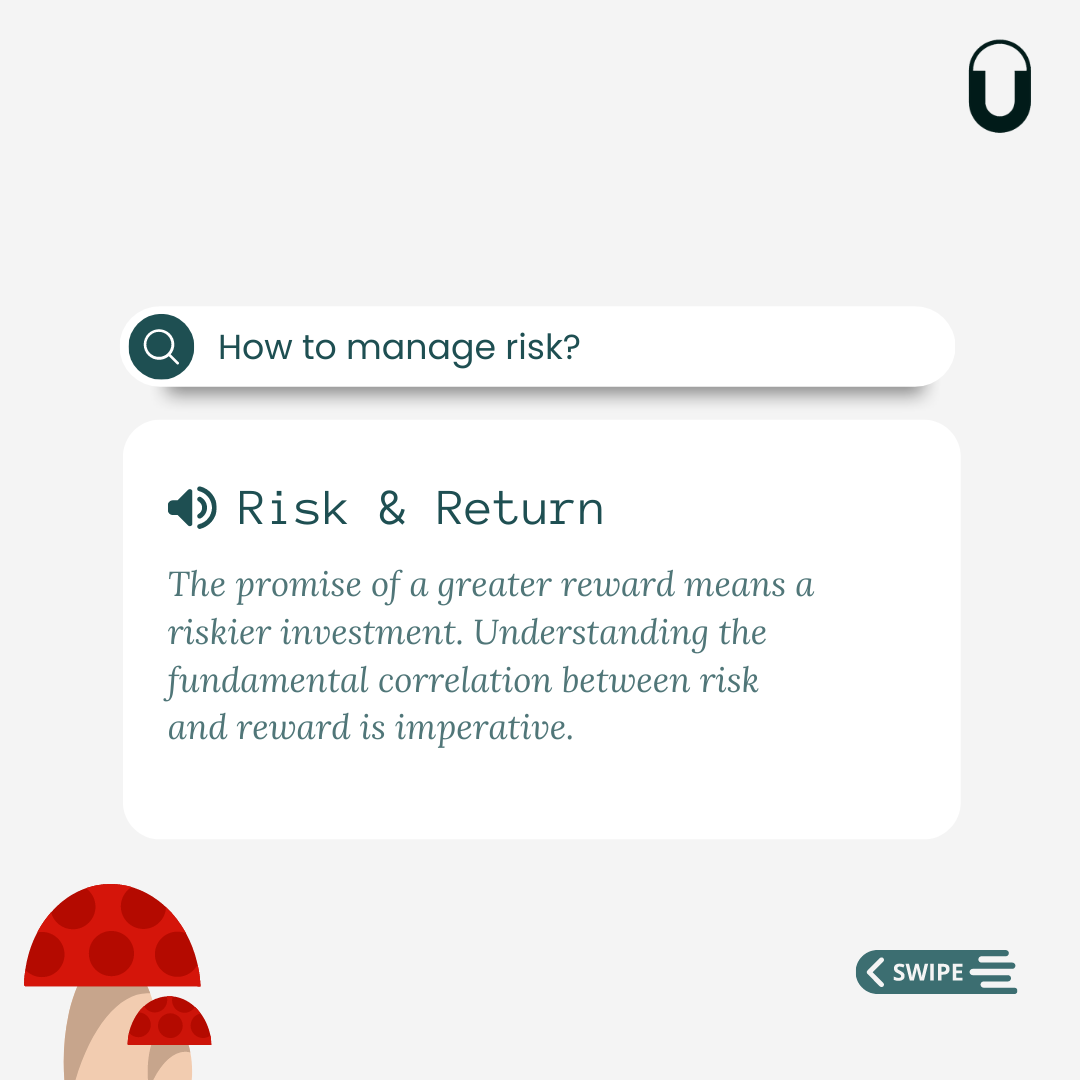
Understanding the fundamental connection between risk and reward is imperative; generally, the promise of a greater reward means a riskier investment. Therefore, if you are a beginner investor, who has not yet fully grasped the nuances of investing, you should be very cautious when using high-return instruments. Inexperienced investors should potentially stay away from leveraged or highly volatile instruments. In the beginning, it would be wise to use more conservative instruments such as bonds and the stocks of well-established companies.
The first and most important way to deal with investment risk – you should invest in instruments which you understand and feel comfortable with.
Low-risk investments
While technically not completely fail-proof, some instruments are considered relatively safe. The most common examples here are the US Treasury bills; they have the backing of the Government of the United States. In particular, the three-month US treasury bill rate of return is often used as one of the proxies for risk-free rate in financial modelling.
Diversification
An effective way to minimize the risk of your portfolio is to spread your capital across asset categories, geographies, industries etc. Diversification considers the fact that the different asset categories react in a different way to the changing market environment. Thus, a well-diversified portfolio can withstand challenging times by balancing one investment with another. A resilient portfolio should ideally include a variety of security types such as stocks, funds, bonds, and money market instruments. A portfolio can be made further resilient by diversifying across geographies, industries, credit risk and other metrics. Generally, the safest asset categories are money market securities and investment-grade bonds. Equities can go from relatively stable to highly risky depending on their business model, products and services, market share, company size, industry, geography, etc.
Quantitative risk measures
Investment risk can be quantified and there are different ways to do that. The most popular risk metric is volatility. It measures the degree of fluctuation of the returns of a financial instrument over a given period. Another popular risk metric is the beta of an instrument. Beta measures an instrument's volatility when comparing it to the underlying market. Plainly stated, when an instrument's beta is higher than one, the market price of a company swings more than the market. The opposite applies when the beta is smaller than one. Another measure of risk worth mentioning is value at risk (VaR). It quantifies the extent of possible financial loss of an instrument or an investment portfolio over a specific time frame.
Conclusion
To summarise, we face risks daily. We know that potential gains always go hand in hand with potential losses. The first step to deal with risks is to understand them. Investment risks are measurable. Assigning a value to a certain type of risk helps us get a grasp of its magnitude. We can reduce investment risk. The key word here is diversification, best described by the famous saying: “Don’t put all your eggs in one basket”.